
Nail the Interviews
Incorporate these smart, but simple techniques to excel in your next job interview

Hi! This is where Jeanine and I share tips from the Design Career Handbook for you to chart and navigate a successful career path. I also share perspectives on what’s happening in technology and design. If you are looking for assistance on your journey, you can book a session on ADPList or reach out to discuss 1:1 coaching. - Kevin F
Whether you’ve been laid off, are looking to make a change, or are a recent grad, you’re probably in job search mode. So I’ll get right to it.
Nail the Interviews is a chapter smack in the middle of Part 3: Look for a Job in the Design Career Handbook. It’s preceded by chapters on: resilience, networking, internships, applying for jobs, and all about the recruiting process. It’s followed by chapters on: crushing design challenges, presenting like a pro, staying top of mind, and what hiring managers want. The chapter is lengthy, so I’ll only share highlights.
It’s a Conversation
It may not feel like it, but think of an interview as a two-way conversation. Yes, you’ll answer questions about yourself and your experience. But you’ll also have opportunities to ask questions.
Interviewing includes phone calls, remote video chats, and in-person meetings. It starts with an initial phone screen and can progress through multiple rounds of interviews. These calls assess whether you meet the requirements, get a feel for your personality and potential, see how well you communicate, and ultimately predict your success in the role. Early-stage calls usually take 30 minutes or less; more in-depth screening calls can range from 45 minutes to one hour.
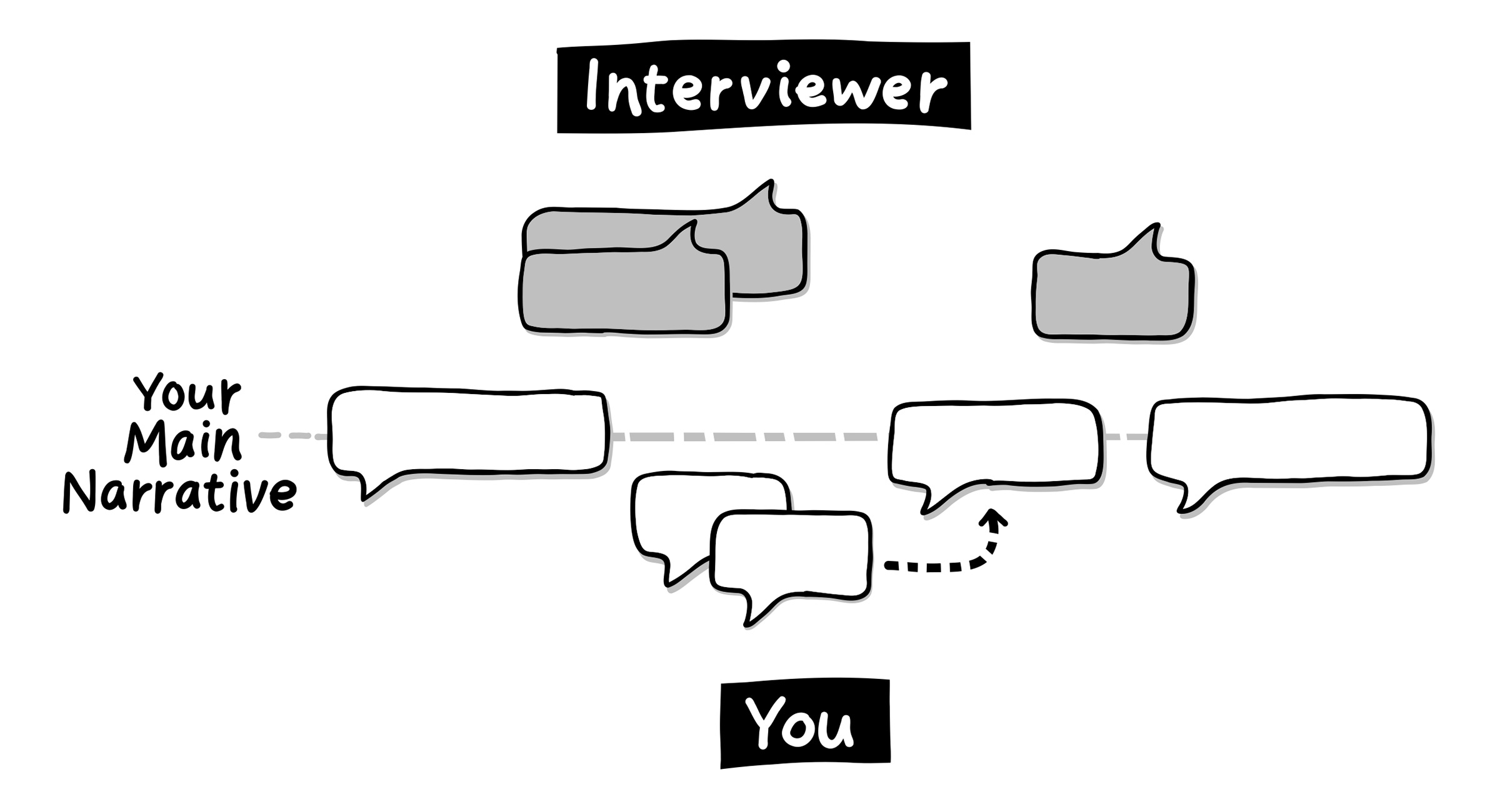
As you progress through the interview process, you should raise additional questions about the opportunity. From a conversational interview or first phone screen to your portfolio presentation, you are also deciding if the role is appropriate for you. Aim to learn more about the company, the team, your potential manager, the work, and the role. Having good questions demonstrates that you care about the prospect and have a genuine interest.
Most questions you’ll encounter are standard regardless of design discipline, industry, or role level. Hiring managers may have their favorite questions, or there may be some that cater to particular roles. There are plenty of resources where you can find example interview questions. We’ll cover the different types along with a few of our top suggestions to ace them.
Behavioral Interviews
When you look up “common job interview questions,” you’ll see many that are typical of a behavioral interview. Some favorites have been in our repertoire as hiring managers for years, and we can guarantee that interviewers will ask these questions. Here are a few:
Tell me about yourself.
Can you share a project you are proud of and why?
What are you good at, and what skills are you still developing?
(strengths and weaknesses)Where do you find inspiration?
Our biggest tip is creating a document, listing core questions, and writing out your answers. You are crafting your narrative script. And you know what comes next, right? Practice! You should rehearse speaking your answers out loud. You may feel weird or embarrassed, but trust us, it will be worth it when you are well-prepared to answer questions confidently in an interview.
As you practice, review your delivery, get feedback from others, and decide what flows well and what doesn’t in your responses. Revise and tighten your script. The goal is for stories to be easily accessible in conversations so that you can deliver them in a compelling and concise way while also sounding natural.
Technical Interviews
These interviews are exactly what they sound like. These are the questions that aim to assess your tech knowledge and proficiency alongside your design process. If you are asked a specific question about a tool or to describe how to accomplish an outcome with design software, use the opportunity to flex your expertise. Just don’t lose sight of the fact that using software is the means to the end of creating successful design solutions. While rare, an interviewer may ask for a peek into your design files. Hiring teams want to know if you’re agile, efficient in software, and have organized files.
SHE formula
This is a terrific formula for open-ended questions, particularly personal ones such as “Tell me about yourself” or “What do you like to do outside of work?” There’s no wrong answer here. You want to present yourself as interesting, perhaps with a surprising hobby or passion. SHE stands for Succinct, Honest, and Engaging.
The key is to share something authentic without going on too long. Avoid topics that could be polarizing or controversial, such as politics. Stick to points that show you as well-rounded and reflect your character.
STAR method
Another one of our go-to interview recommendations is the STAR method. STAR is an easy acronym to remember and an excellent framework for assembling a narrative on the fly. You can also consider this approach when drafting portfolio case studies. STAR can help you determine headlines and scannable quotes for a case study.
STAR stands for Situation, Task, Action, and Result.
Situation: Provide an overview of the situation.
Task: Describe your responsibility and specific tasks.
Action: Explain the details you took to address the task(s).
Result: Share the outcomes achieved by your actions.
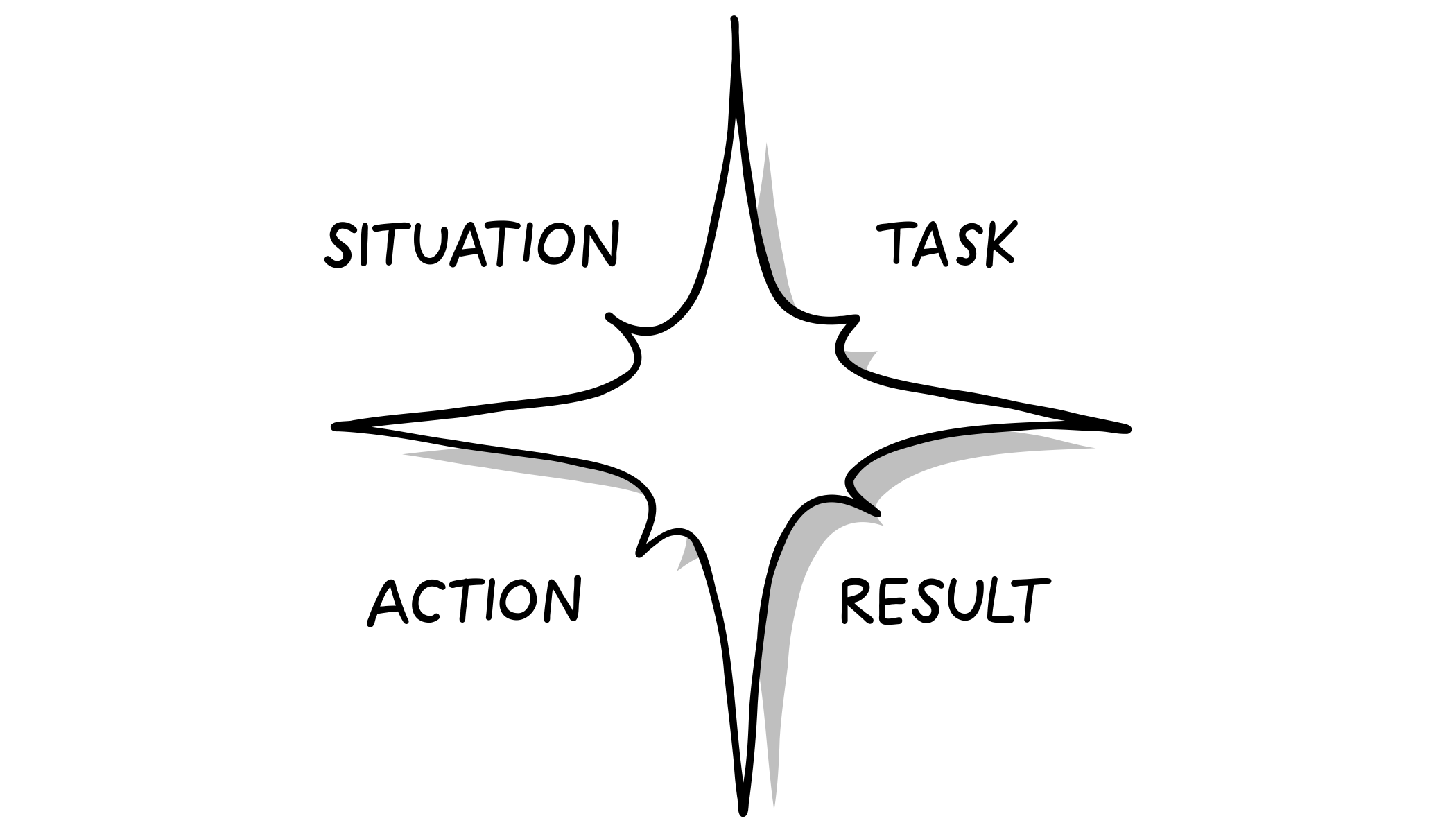
Think of it as a condensed way of recalling the highlights of a project without getting into every stage of the design process. It can help you sequence your thoughts and convey the salient details in response to typical questions that begin like this:
Tell me a time when…
Have you ever…
Give me an example of…
Tell me about how you would…
Most behavioral questions that start with the phrases above will be inquiries about your interactions or actions. That means your interviewer expects a narrow response. Use STAR to structure an anecdote about a specific aspect of one of your projects. It could be about aligning on a goal, negotiating a direction, debating about insights from data and feedback, or testing a solution.
Using STAR helps you to be concise with your response. If you aim for just a few sentences and about 1–2 minutes for each portion, you’ll have a crisp 5–8 minute response. Stick to pertinent details to address the question. Without visual aids, you can lose your interviewer if you provide too much information. Also, avoid answering generically. You must go deeper than you “worked hard” or “figured it out.” Provide specific examples of what you did and the impact.
Navigating Conversations
There are a few valuable tips for all conversations you have in life. The first is to be an active listener. It can be challenging in an interview as the point is to focus on listening closely when the other person is speaking rather than thinking about what you want to say next! Active listening includes paying close attention, reflecting on what is said, and responding appropriately. This is why rehearsing your interview responses is worthwhile. In a conversation, you need to artfully think on your feet when responding and get yourself back on track to anecdotes you want to share.
Conversations with interviewers are your first opportunities to demonstrate curiosity. You should prepare before your first contact by researching everything you can about the potential employer. Whether it’s a company, an agency, or a small business, be sure you know what they do and write out a list of questions you can ask. It can be about their clients or customers, products and services, initiatives, the team you may work with, or more about the role. This preparedness will show how much you are interested in and value the opportunity. Have a few questions ready if you have an open-ended chance to ask, or use them as topic follow-ups.
About the company and executive leaders
How the business is doing in terms of revenue or funding
Design’s role in the company strategy (the proverbial seat-at-the-table topic)
Learning, mentorship, and growth opportunities
You should dive deep and ask questions about the specific role and team, which may include topics such as:
The traits and skills needed for you to hit the ground running to make a personal impact
Who will you work with regularly, and what are their strengths and gaps (peers, partners, stakeholders)
Your potential design manager’s leadership style
The biggest challenges facing the team at the moment
You’ll have successful interviews if your responses and questions establish your qualifications for the job. Remember to sprinkle memorable anecdotes from your story bank into conversations. Leave your interviewer with something surprising that influences your design perspective or that you are extremely curious about. These details can differentiate you from the competition.
The interview is a crucial stage where your storytelling skills and practice in advance will pay off. Please let us know if any of these tips work for you.
We could always use your help spreading the word about our book. It would make an excellent gift for a recent design grad! Besides everything related to job searching and portfolios, it also contains plenty of advice, tips, and stories for working designers looking to advance their careers.
If you already have it, thank you! We’d be grateful for your review on Amazon. ✏️
Don’t have it yet? The Design Career Handbook: Everything You Need to Know to Get a Job and Be Successful is available in paperback and ebook formats at Amazon and Barnes & Noble online!